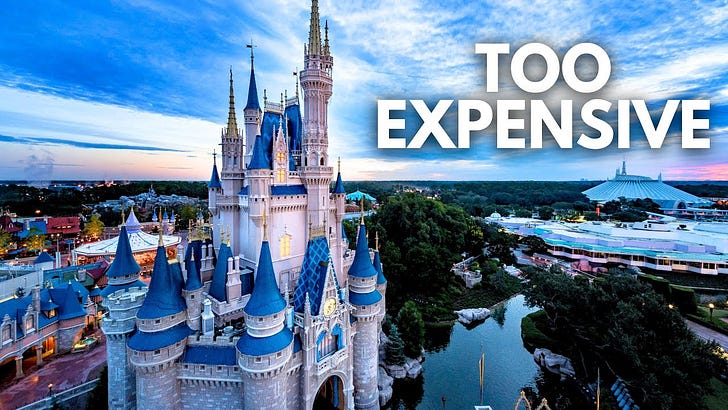
Disney Abandoned America for the 1%
Discover how Disney transformed from a family-friendly brand into a luxury experience that’s out of reach for many. In this deep-dive conversation, Simone and Malcolm Collins break down the skyrocketing costs of Disney parks, merchandise, and streaming, and explore why so many fans are willing to go into debt for a taste of the “magic.” The Collinses look at the business strategies behind Disney’s price hikes, the psychology of Disney fandom, and what this shift means for fam
ilies, kids, and the future of entertainment. Whether you’re a lifelong Disney fan, a parent, or just curious about the economics of modern brands, this episode will change how you see the “Happiest Place on Earth.”
As this was another Simone-outlined episode, we also have those episode notes to share if you want them! You’ll find them below and the episode transcript follows.
Episode Outline: How Disney Became a Luxury Good:
Intro
* Disney is no longer affordable and we need to talk about it
* Disney park entrance fees now rise about twice as fast as the cost of an average American’s basket of goods and services, and faster than major competitors’ ticket prices
* Disney is also charging customers for a myriad of add-ons in a way that’s insane
* Jake of Bright Sun Films / Travels puts it well:
*
* At one point, he pays $42 just for himself and his girlfriend to access a new attraction (the Tron ride)
* He dropped 886 USD for one day (not doing anything particularly special)
* Surveys in 2024-2025 show that around 24% of all US Disney park visitors have gone into debt to pay for their Disney trip, with the rate soaring to 45% among parents with children under 18. The average debt for these trips is about $2,000 per family, and most indebted guests took on their Disney debt within the past five years
* Why this matters:
* Disney is not unique; it’s representative of any non-commoditized product in a market
* And discourse around Disney’s unaffordability yields a key insight
* Because non-commodity products will be endlessly exploitative; they will never really be affordable or sustainable
* When you live a mainstream, consumerist lifestyle, you will NEVER have enough money to afford luxuries
* It’s not that you cannot afford fun or kids; it’s that you cannot afford to hedonically survive in modern culture
* And this should be a wakeup call that you need to find contentment from within your own home: Your work, your family, and your community.
Price Hikes
When adjusted for inflation, entrance fee increases at US-based Disney parks have significantly outpaced both the national inflation rate and the price hikes at rival parks such as Universal Studios and Six Flags, though all major parks have seen double-digit real increases in the past decade
Disney Tokyo vs. USA Disney
Park Meals
Park Add-Ons
The original FastPass (1999–2020) was included free with admission; paid add-ons began with MaxPass and evolved into Genie+, Lightning Lane, and Multi Pass, each showing rapid price escalation
Disney+
* Disney+: The Sun: PRICE PAINS Disney slaps fans with higher prices days after Jimmy Kimmel billion-dollar bombshell https://www.the-sun.com/money/15238183/disney-plus-hulu-price-increase-jimmy-kimmel-charlie-kirk/
Disney Debt
Key Debt Statistics for Disney Vacations
* 24% of Disney park attendees have taken on debt for their trip, up sharply from 18% in 2022.
* 45% of parents with children under 18 have gone into debt for a Disney trip, up from 30% in 2022.
* The average Disney-related debt for parents with young children is $1,983 per trip.
* Debt most commonly covers concessions (food, drink), transportation, and accommodations.
* 83% of indebted parents incurred their Disney debt within the past five years, with 35% in the past year alone.
* Gen Z (39%) and Millennials (36%) are likeliest to take on Disney debt, while just 7% of Boomers do so.
* Men are twice as likely as women to take on Disney debt (32% vs. 16%).
* Most families pay off their Disney-related debt within six months, and nearly 60% report no regrets about spending for Disney memories.
The Disney Delusion
People are so brainwashed into Disney fandom (which we would argue is analogous to any facet of modern mainstream culture) that Disney is able to exploit them in a myriad of ways—and it will never be enough.
Examples:
* Disney Merchandise, with some mickey mouse ears being as much as $198: https://www.disneystore.com/accessories/adults/ear-hats-headbands/
* A typical price is $44
* Disney Vacation Club (DVC), Disney’s a robust timeshare model, with expanded resorts and enhanced member-exclusive experiences
* They extract more out of their members with DVC resale, rentals, and point-based enhancements
* “Enchanting Extras” in parks, like exclusive fireworks views, private tours, premium lounges, animal encounters, and adventure activities requiring advance reservations and high per-person fees
* Also in parks for an extra fee: New dining events, club lounges (e.g., Pirates of the Caribbean tavern, Spaceship Earth lounge), after-hours parties, and dessert parties
Why this exploitative behavior is logical and somewhat inevitable
Disney’s Transparent Approach
Disney is going to quality, not quantity: The Mirror: https://www.themirror.com/news/us-news/disney-world-empty-americans-fear-1398349 Disney World ‘empty’ as Americans fear tourism is ‘finished’ in Florida
* “Disney World has been a ghost town this summer, with visitors sharing different theories about what might be behind the quiet scenes at the popular theme park”
Core Elements of Disney’s Strategy
* Fewer, Wealthier Guests:Disney’s data shows the top 10% of US earners now account for half of all consumer spending, so parks focus on affluent demographics who can pay for new premium experiences, suites, and costly add-ons.
* Higher Per-Guest Revenue:Recent quarterly and annual reports show Disney parks earning record profits with attendance still below pre-pandemic levels, thanks to massive increases in per-capita guest spending on upcharges, hotels, food, and special services. The result: “more profit from fewer park visitors”.
* Active Price Optimization:Disney employs dynamic, date-based pricing, high price increases for skip-the-line add-ons, and a steady stream of upcharges. Revenue repeatedly rises even when traffic is flat or falls, and executive commentary explicitly acknowledges the strategy of maximizing revenue from each visitor.
* Not Seeking Lower Crowds for Comfort:Disney does not primarily want less crowded parks; it simply wants “optimized” attendance where yield per guest is highest, and will flex promotions only if revenue growth stalls or competition rises.
Outcome and Position
* Disney’s pricing model is now widely understood—even by executives and analysts—as being engineered to attract “fewer but wealthier” guests or families willing to take on debt for a premium experience.
* Critics, longtime fans, and analysts note that this model risks losing the middle-class base, with executives candid that record-setting investments in parks will only be recouped by sustained high guest spending, not by maximizing attendance.
This Model Being Common
If you’re not selling a commodity, it is more logical to charge more and double down on high rollers rather than bu
You May Also Like

RADIO KULTURAEUROPA
RADIO KULTURAEUROPA

How Men Think
iHeartPodcasts

During the Break with Clint Powell
Clint Powell

CAMINANDO POR EL MEDIO
Radio Trend Topic

Am I the Jerk?
youtube.com/amithejerk

Es Noticia
esRadio

Fulda Kultur - Der Podcast
Fulda Kultur / Shaggy Schwarz

Con ánimo de lucro
esRadio

Estelle Midi
RMC

Madrid es noticia
esRadio
RADIO KULTURAEUROPA
RADIO KULTURAEUROPA
How Men Think
iHeartPodcasts
During the Break with Clint Powell
Clint Powell
CAMINANDO POR EL MEDIO
Radio Trend Topic
Am I the Jerk?
youtube.com/amithejerk
Es Noticia
esRadio
Fulda Kultur - Der Podcast
Fulda Kultur / Shaggy Schwarz
Con ánimo de lucro
esRadio
Estelle Midi
RMC
Madrid es noticia
esRadio
Community discussion