New Research: The Left Hates You WAY More than You Think
In this episode of Based Camp, Malcolm and Simone Collins dig into a recent study on political meta-dehumanization and the striking asymmetry in how liberals and conservatives mentally represent (and dehumanize) each other.
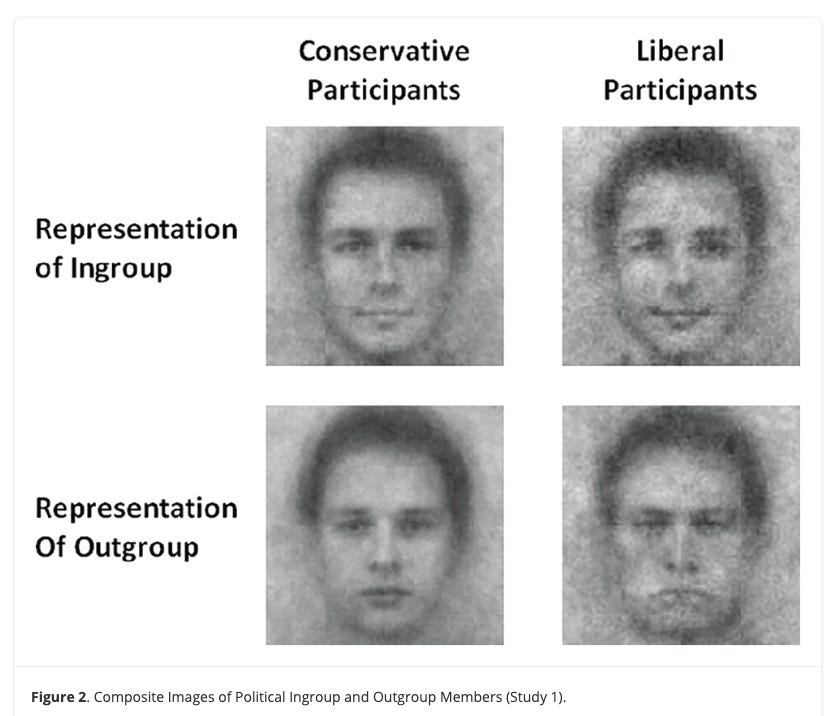
Drawing on research published in Personality and Social Psychology Bulletin (“Political Meta-Dehumanization in Mental Representations”), posts from Cremieux and Arctotherium, and the composite face images the study produced, they unpack why liberals tend to see conservatives as savage, aggressive, and barely human, while conservatives tend to see liberals as immature, irrational, and naive. They also examine how each side misjudges the intensity of the other’s hostility—and what that means for political strategy.
The conversation covers:
* Why the right’s greater empathy and openness has been a long-term cultural advantage (and how it has converted figures from JK Rowling to Elon Musk to RFK Jr.)
* The dangers of treating the other side as merely misguided when they view you as an existential threat
* Why kindness and inclusivity remain powerful conversion tools—while still refusing to hand over institutional or administrative power
* Related findings on empathy asymmetries, institutional capture, and the limits of democratic norms when one side stops playing fair
* Practical implications for coalitions, tech/AI companies, and long-term power
A candid, research-grounded discussion on dehumanization, strategy, and how the right should (and shouldn’t) respond.
Show Notes
Cremieux: There’s an asymmetry in how liberals and conservatives evaluate one another.
Liberals dehumanize conservatives more than conservatives suspect. Conservatives dehumanize liberals less than liberals suspect.
Arctotherium: In the US, liberals think conservatives hate them much more than conservatives actually do, while conservatives don’t realize liberals hate them as much as liberals actually do. The hatred asymmetry is one reason liberals tend to win over time.
The research: Political (Meta-)Dehumanization in Mental Representations: Divergent Emphases in the Minds of Liberals Versus Conservatives
Published July 7th in the Personality and Social Psychology Bulletin
The Gist:
The researchers found that liberals and conservatives dehumanize each other in different ways, and that each side has a surprisingly accurate sense of the type of dehumanization they receive, even while misjudging its overall intensity.
The Experiment
* They had participants choose faces that “look like a liberal” or “look like a conservative” hundreds of times; these are averaged into composite faces that approximate mental representations.
* Then, a new group of people—who didn’t know where the images came from—rated each composite face on:
* “Savage/aggressive, lacking morals, barbaric/cold‑hearted” (savagery)
* “Immature/irresponsible, irrational/illogical, naïve/gullible” (immaturity)
* Plus general warmth and “evolved‑ness.”
* Study 2 asks: “How do you think the other side sees your side?”
* Again using liberals and conservatives, they changed the prompt in the 300‑trial face task.
* Conservatives were asked: “Who would a liberal think looks more like a conservative?”
* Liberals were asked: “Who would a conservative think looks more like a liberal?”
* From these choices they built two meta‑representation composites:
* Conservatives’ guess about how liberals picture conservatives
* Liberals’ guess about how conservatives picture liberals
* In Phase 2, a new group of raters evaluated these meta‑representation images side‑by‑side with the real outgroup images from Study 1 (the actual way the other side pictured you).
* They used the same savagery and immaturity rating scales, plus warmth and “evolved‑ness.”
Core Findings
* Asymmetric dehumanization:
* When conservatives think about liberals, their mental images emphasize liberals as immature, irrational, naïve, and irresponsible more than as savage or evil.
* When liberals think about conservatives, their mental images emphasize conservatives as savage, aggressive, morally lacking, and cold‑hearted more than as immature or silly.
* Outgroup over ingroup dehumanization
* Reverse‑correlation composites of ingroup faces are rated as less dehumanizing than “outgroup” faces for both liberals and conservatives, even after controlling for general warmth/liking.
* Inaccurate assumptions around intensity of hate
* When people imagine how the other side sees them (meta‑representations), those images show the same relative pattern—conservatives expect to be seen as savage more than immature, liberals expect to be seen as immature more than savage. But liberals overestimate how dehumanized they are by conservatives, while conservatives underestimate how dehumanized they are by liberals.
Discussion of the Findings on Social Media
* @ReaptheWhirlSL wrote: “Conservatives believe liberals are just misguided but well meaning people. Liberals believes conservatives are either retarded scum or evil demons both of who need to be cleansed from the world to usher in utopia. This is why things are the way they are now.”
* To which @JamesQBentley responded: “Yep...I’ve made this point to people on the Left, and instead of it leading to any self-reflection on their part, they usually just double down and say that, yeah - conservatives just *are* evil...So, alas, these studies don’t move the needle”
* Scott Wellman posted a cartoon by @Governmentisthenewreligion
Why This Matters
Prior research shows that expecting to be dehumanized (aka meta‑dehumanization) predicts reciprocal dehumanization and support for norm‑breaking, anti‑democratic behaviors (e.g., gerrymandering that advantages one’s own party even if illegal). If meta‑perceptions are systematically exaggerated or distorted, they can fuel cycles of escalation and institutional erosion even when actual attitudes are less extreme.
Also:
* Content of contempt differs by side.
* The stereotypical quip “conservatives think liberals are stupid, liberals think conservatives are evil” maps closely onto their findings: conservatives’ dehumanization is maturity‑focused, liberals’ is savagery‑focused.
* This implies different psychological and behavioral consequences—for instance, seeing someone as immature might elicit paternalism or dismissal, whereas seeing someone as savage might elicit fear, moral outrage, or punitive impulses.
* Interventions must be tailored.
* Because types of dehumanization have distinct downstream effects (e.g., animalistic vs mechanistic dehumanization relate to different forms of mistreatment), knowing that liberals emphasize “savagery” and conservatives “immaturity” suggests that effective depolarization strategies may need to be side‑specific:
* For liberals, interventions might highlight conservatives’ warmth, compassion, or moral concern to counter savagery narratives.
* For conservatives, interventions might highlight liberals’ responsibility, organization, and seriousness to counter immaturity narratives.
* Meta‑dehumanization is calibrated in structure but biased in scale.
* People seem to have reasonably accurate mental models of the *form* of dehumanization they face (whether they’re seen as evil vs childish),
You May Also Like

RADIO KULTURAEUROPA
RADIO KULTURAEUROPA

How Men Think
iHeartPodcasts

During the Break with Clint Powell
Clint Powell

Am I the Jerk?
youtube.com/amithejerk

Es Noticia
esRadio

Con ánimo de lucro
esRadio

Estelle Midi
RMC

Madrid es noticia
esRadio

The Ranch Podcast
Matt Todd
The J. Burden Show
J. Burden
RADIO KULTURAEUROPA
RADIO KULTURAEUROPA
How Men Think
iHeartPodcasts
During the Break with Clint Powell
Clint Powell
Am I the Jerk?
youtube.com/amithejerk
Es Noticia
esRadio
Con ánimo de lucro
esRadio
Estelle Midi
RMC
Madrid es noticia
esRadio
The Ranch Podcast
Matt Todd
The J. Burden Show
J. Burden
Community discussion