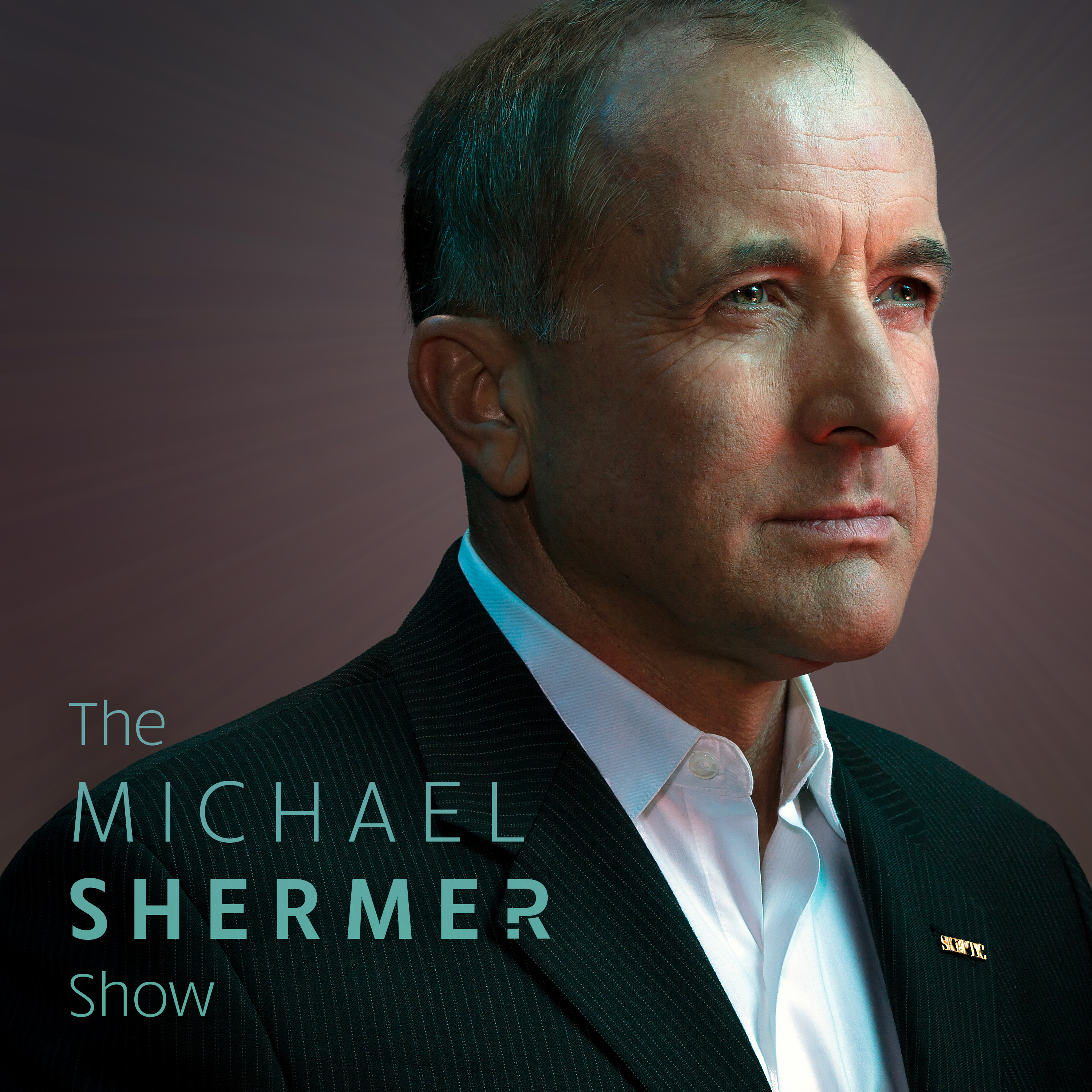
How Likely Is War Over Taiwan?
So much of what we hear about China and Russia today likens the relationship between these two autocracies and the West to a "rivalry" or a "great-power competition." Some might consider it alarmist to say we are in the midst of a second Cold War, but that may be the only responsible way to describe today's state of affairs.
What's more, we have come a long way from Mao Zedong's infamous observation that "political power grows out of the barrel of a gun." Now we live in an age more aptly described by Vladimir Putin's cryptic prophecy that "artificial intelligence is the future not only of Russia, but of all mankind, and whoever becomes the leader in this sphere will become ruler of the world."
George S. Takach's incisive and meticulously researched new volume, Cold War 2.0, is the book we need to thoroughly understand these frightening and perilous times. In the geopolitical sphere, there are no more pressing issues than the appalling mechanizations of a surveillance state in China, Russia's brazen attempt to assert its autocratic model in Ukraine, and China's increasingly likely plans to do the same in Taiwan.
But the key here, Takach argues, is that our new Cold War is not only ideological but technological: the side that prevails in Cold War 2.0 will be the one that bests the other in mastering the greatest innovations of our time. Artificial intelligence sits in our pockets every day—but what about AI that coordinates military operations and missile defense systems? Or the highly sophisticated semiconductor chips and quantum computers that power those missiles and a host of other weapons? And, where recently we have seen remarkable feats of bio-engineering to produce vaccines at record speed, shouldn't we be concerned how catastrophic it would be if bio-engineering were co-opted for nefarious purposes?
Takach thoroughly examines how each of these innovations will shape the tension between democracy and autocracy, and how each will play a central role in this second Cold War. Finally, he crafts a precise blueprint for how Western democracies should handle these innovations to respond to the looming threat of autocracy—and ultimately prevail over it.
George S. Takach holds a bachelor's degree in history, political economy, and philosophy from the University of Toronto; a graduate degree from the Norman Paterson School of International Affairs at Carleton University; and a law degree from the University of Toronto. For forty years, he practiced technology law at McCarthy Tétrault, Canada's premier law firm. He has written three books on technology law/tech commercial subjects. Cold War 2.0: Artificial Intelligence in the New Battle between China, Russia, and America is his first book for a general audience.
Shermer and Takach discuss: Vladimir Putin: "artificial intelligence is the future not only of Russia, but of all mankind, and whoever becomes the leader in this sphere will become ruler of the world." • what AI will be able to do in the coming decades • China's surveillance state • Russia and Ukraine • Cold War 1.0: Autocracy, Democracy and Technology • Cold War 2.0: AI and Autocracy and Democracy • semiconductor chip supremacy • biotechnology • how China's invasion of Taiwan is likely to unfold, and what the U.S. can do about it.
You May Also Like

The Best of Coast to Coast AM
iHeartPodcasts and Coast to Coast AM

Bedtime Astronomy
Synthetic Universe
New Books in Environmental Studies
Marshall Poe
New Books in Communications
Marshall Poe

Il podcast di Piergiorgio Odifreddi: Lezioni e Conferenze.
Vito Rodolfo Albano

The Grave Talks | Haunted, Paranormal & Supernatural
Ghost Stores, Haunted, Paranormal & Supernatural Stories

This Week in Virology
Vincent Racaniello
Astronomy Daily: Space News Updates
bitesz.com

懂心理,調出好關係 《Healthy Relationship》
姜尚文心理師,朴世光心理師

Geoengineering Watch Global Alert News
Dane Wigington
The Best of Coast to Coast AM
iHeartPodcasts and Coast to Coast AM
Bedtime Astronomy
Synthetic Universe
New Books in Environmental Studies
Marshall Poe
New Books in Communications
Marshall Poe
Il podcast di Piergiorgio Odifreddi: Lezioni e Conferenze.
Vito Rodolfo Albano
The Grave Talks | Haunted, Paranormal & Supernatural
Ghost Stores, Haunted, Paranormal & Supernatural Stories
This Week in Virology
Vincent Racaniello
Astronomy Daily: Space News Updates
bitesz.com
懂心理,調出好關係 《Healthy Relationship》
姜尚文心理師,朴世光心理師
Geoengineering Watch Global Alert News
Dane Wigington
Community discussion