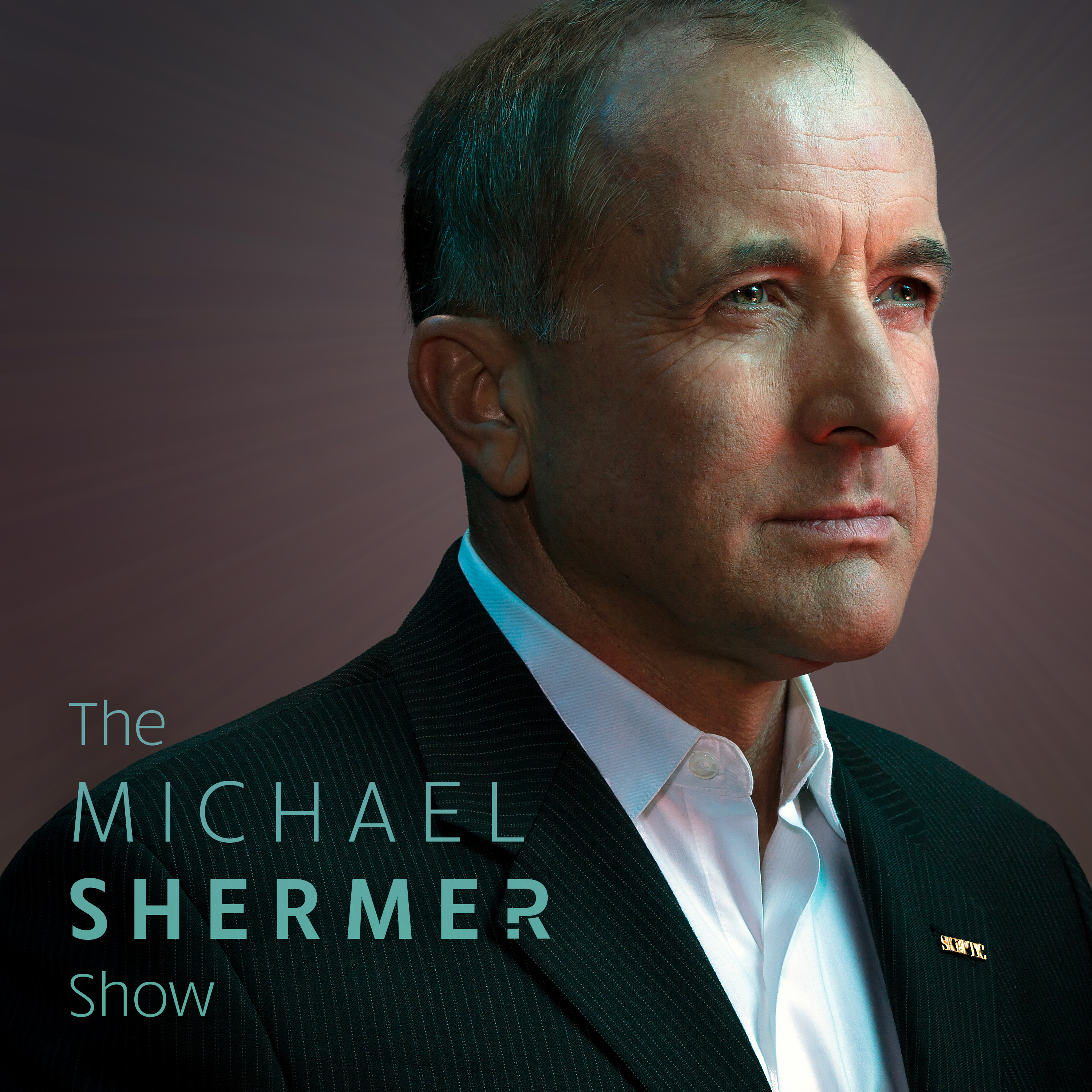
The Power of Noticing What Was Always There
Have you ever noticed that what is thrilling on Monday tends to become boring on Friday? Even exciting relationships, stimulating jobs, and breathtaking works of art lose their sparkle after a while. People stop noticing what is most wonderful in their own lives. They also stop noticing what is terrible. They get used to dirty air. They stay in abusive relationships. People grow to accept authoritarianism and take foolish risks. They become unconcerned by their own misconduct, blind to inequality, and are more liable to believe misinformation than ever before.
But what if we could find a way to see everything anew? What if you could regain sensitivity, not only to the great things in your life, but also to the terrible things you stopped noticing and so don't try to change?
Shermer and Sharot discuss: the best day of her life • the evolutionary origins of habituation • habituation at work, at home, and in the bedroom • Why don't we habituate to extreme pain? • marriage, romance, monogamy, infidelity • depression • depression, happiness, and variety • negativity nias • creativity and habituation disruption • lying and misinformation • illusory truth effect • truth bias • moral progress • preference falsification • pluralistic ignorance.
Tali Sharot is a professor of cognitive neuroscience at University College London and MIT.
You May Also Like

The Best of Coast to Coast AM
iHeartPodcasts and Coast to Coast AM

Bedtime Astronomy
Synthetic Universe
New Books in Environmental Studies
Marshall Poe
New Books in Communications
Marshall Poe

Il podcast di Piergiorgio Odifreddi: Lezioni e Conferenze.
Vito Rodolfo Albano

The Grave Talks | Haunted, Paranormal & Supernatural
Ghost Stores, Haunted, Paranormal & Supernatural Stories

This Week in Virology
Vincent Racaniello

Astronomy Daily: Space News Updates
bitesz.com

懂心理,調出好關係 《Healthy Relationship》
姜尚文心理師,朴世光心理師

Geoengineering Watch Global Alert News
Dane Wigington
The Best of Coast to Coast AM
iHeartPodcasts and Coast to Coast AM
Bedtime Astronomy
Synthetic Universe
New Books in Environmental Studies
Marshall Poe
New Books in Communications
Marshall Poe
Il podcast di Piergiorgio Odifreddi: Lezioni e Conferenze.
Vito Rodolfo Albano
The Grave Talks | Haunted, Paranormal & Supernatural
Ghost Stores, Haunted, Paranormal & Supernatural Stories
This Week in Virology
Vincent Racaniello
Astronomy Daily: Space News Updates
bitesz.com
懂心理,調出好關係 《Healthy Relationship》
姜尚文心理師,朴世光心理師
Geoengineering Watch Global Alert News
Dane Wigington
Community discussion