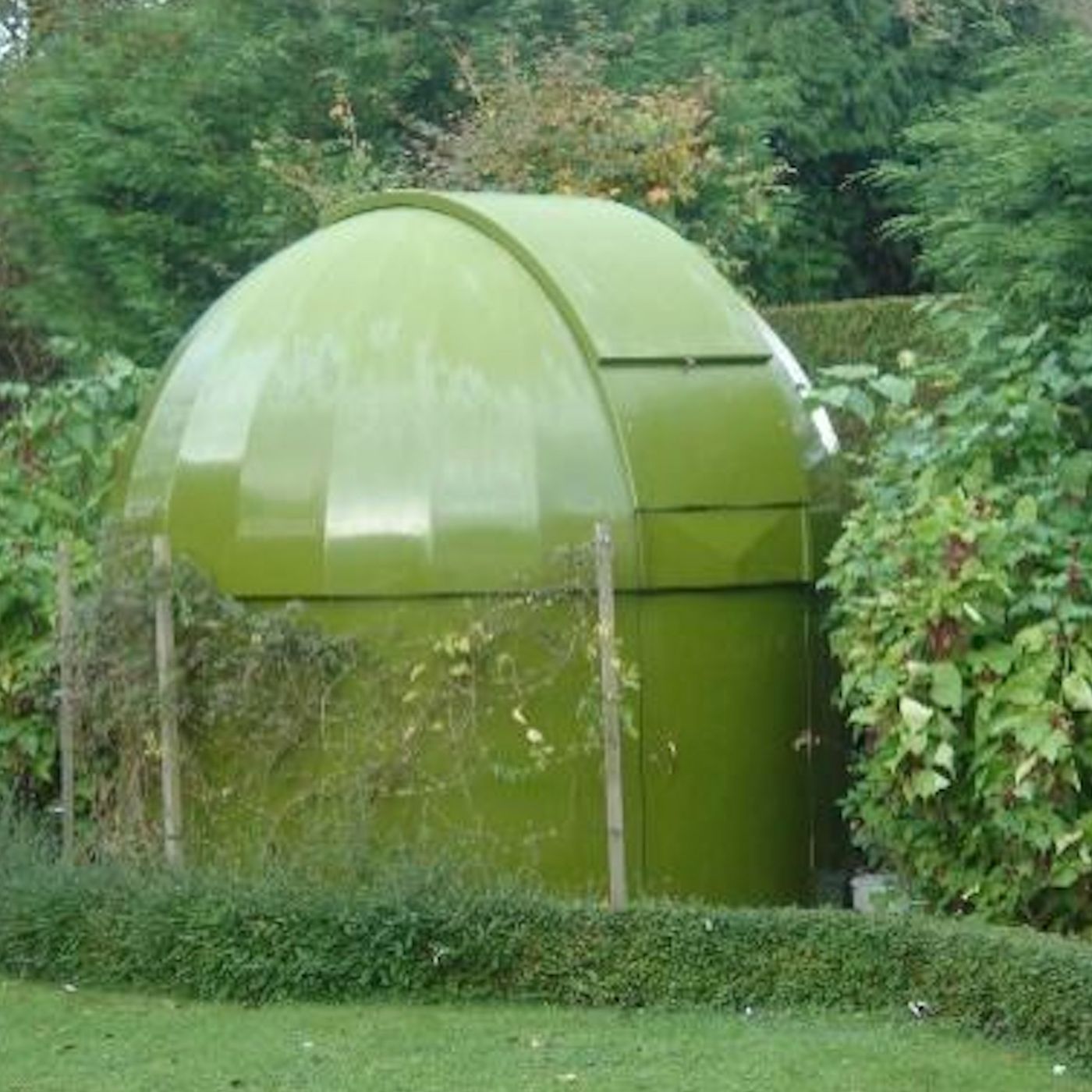
112E-124-Great Shefford Observatory
On the first night an Earth approaching asteroid candidate is discovered, one is lucky to obtain observations for a few hours along its path in the sky. Since a typical near Earth asteroid takes from a few hundred days to several years to complete a trip around the Sun, it takes more than a few hours of data to be able to predict where it will go. Peter Birtwhistle of the Great Shefford Observatory in England is one of unsung heroes of the asteroid hunting community. On a recent observing run he helped to determine the orbits of several objects which I discovered with the NASA funded, Catalina Sky Survey, 60 inch telescope on Mt. Lemmon. Without his efforts they would have likely been lost. These are only the most recent results of his work. Over the years, his data have helped to establish the orbits of more than 4000 Earth approaching objects
You May Also Like

Astronomy Daily: Space News Updates
bitesz.com

The Grave Talks | Haunted, Paranormal & Supernatural
Ghost Stores, Haunted, Paranormal & Supernatural Stories

Sasquatch Chronicles
Sasquatch Chronicles - Bigfoot Encounters
Somewhere in the Skies
SpectreVision Radio

UAP Files Podcast
UAP Files Podcast
Cosmosis [Formerly The UFO Rabbit Hole]
Kelly Chase
Life, Death, and Taxonomy
Life, Death, and Taxonomy

Podcast de Juan Ramón Rallo
Juan Ramón Rallo

Vida Eterna. Respuestas desde la Ciencia | Dr. Manuel Sans Segarra
Dr. Manuel Sans Segarra

The Best of Coast to Coast AM
iHeartPodcasts and Coast to Coast AM
Astronomy Daily: Space News Updates
bitesz.com
The Grave Talks | Haunted, Paranormal & Supernatural
Ghost Stores, Haunted, Paranormal & Supernatural Stories
Sasquatch Chronicles
Sasquatch Chronicles - Bigfoot Encounters
Somewhere in the Skies
SpectreVision Radio
UAP Files Podcast
UAP Files Podcast
Cosmosis [Formerly The UFO Rabbit Hole]
Kelly Chase
Life, Death, and Taxonomy
Life, Death, and Taxonomy
Podcast de Juan Ramón Rallo
Juan Ramón Rallo
Vida Eterna. Respuestas desde la Ciencia | Dr. Manuel Sans Segarra
Dr. Manuel Sans Segarra
The Best of Coast to Coast AM
iHeartPodcasts and Coast to Coast AM
Community discussion