304E-323-Big Splash
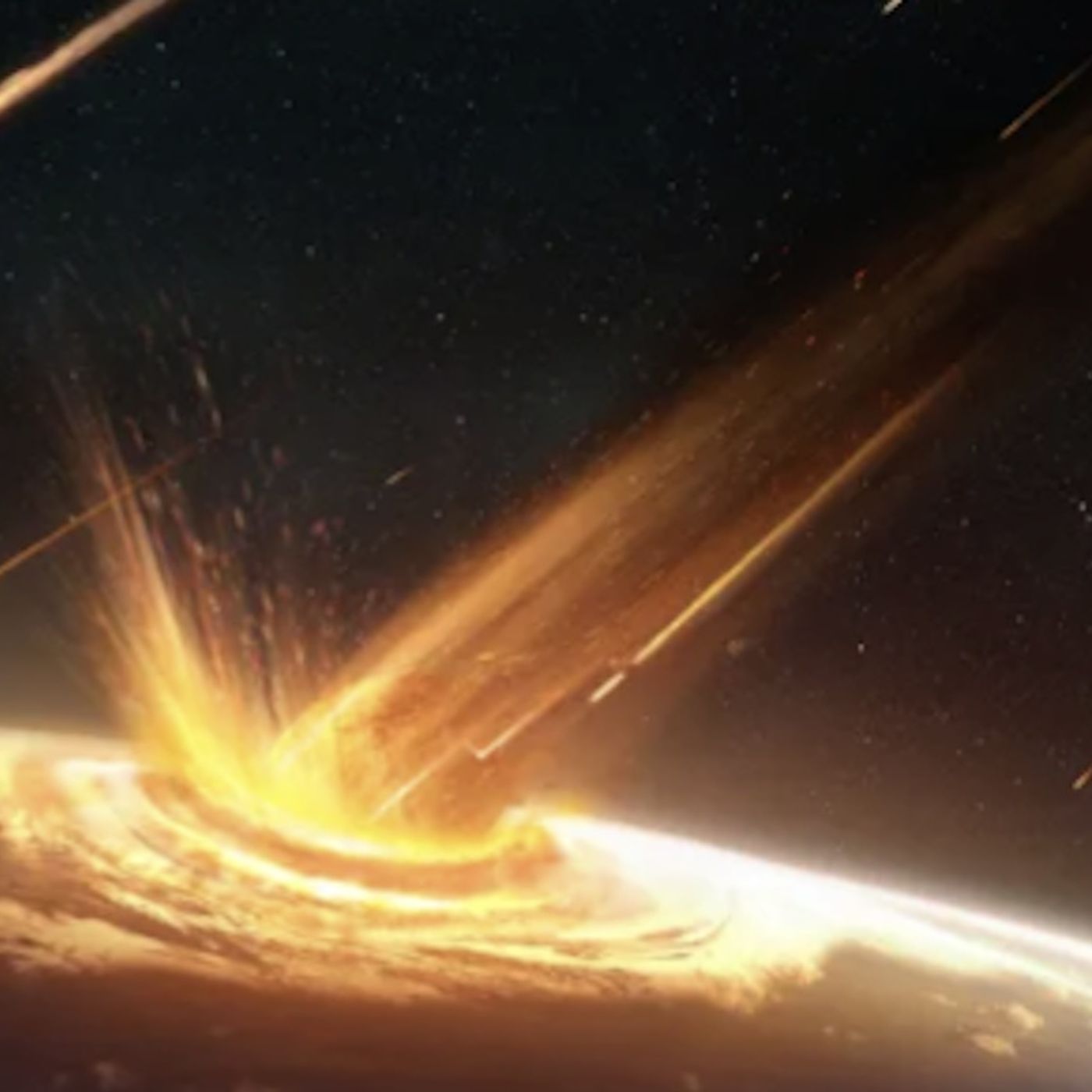
To discover what would happen if an asteroid were to strike a large body of water, Dr. Galen Gisler led a team of scientists who used high performance computing facilities at Los Alamos National Laboratory to calculate and visualize a 3-D model of an asteroid entering the Earth's atmosphere over one of the world's oceans. These efforts won them the Best Visualization and Data Analytics Showcase award at Supercomputing 2016. Reality is that what happens depends upon the mass, size, speed, angle of approach, and composition of the impacting object. Galen's group of scientists documented the hunch that since an asteroid strikes the water at a single point, it only effects the immediate region around the impact point, whereas to create a tsunami, you need something like an under water landslide which disturbs an entire water column from the ocean floor to the surface.
You May Also Like

Eye On The Sky
Vermont Public

Farm Small Farm Smart Daily
The Modern Grower Podcast Network

Stuff To Blow Your Mind
iHeartPodcasts

MinuteEarth
Minute Earth

Bedtime Astronomy
Synthetic Universe

Something You Should Know
Mike Carruthers | OmniCast Media

BirdNote Daily
BirdNote

IQ - Wissenschaft und Forschung
Bayerischer Rundfunk

Real Ghost Stories Online
Real Ghost Stories Online | Paranormal, Supernatural & Horror Radio
Paranormal Mysteries
Nic Ryan | Paranormal Mysteries Podcast
Eye On The Sky
Vermont Public
Farm Small Farm Smart Daily
The Modern Grower Podcast Network
Stuff To Blow Your Mind
iHeartPodcasts
MinuteEarth
Minute Earth
Bedtime Astronomy
Synthetic Universe
Something You Should Know
Mike Carruthers | OmniCast Media
BirdNote Daily
BirdNote
IQ - Wissenschaft und Forschung
Bayerischer Rundfunk
Real Ghost Stories Online
Real Ghost Stories Online | Paranormal, Supernatural & Horror Radio
Paranormal Mysteries
Nic Ryan | Paranormal Mysteries Podcast
Community discussion