394E-435-Number 31
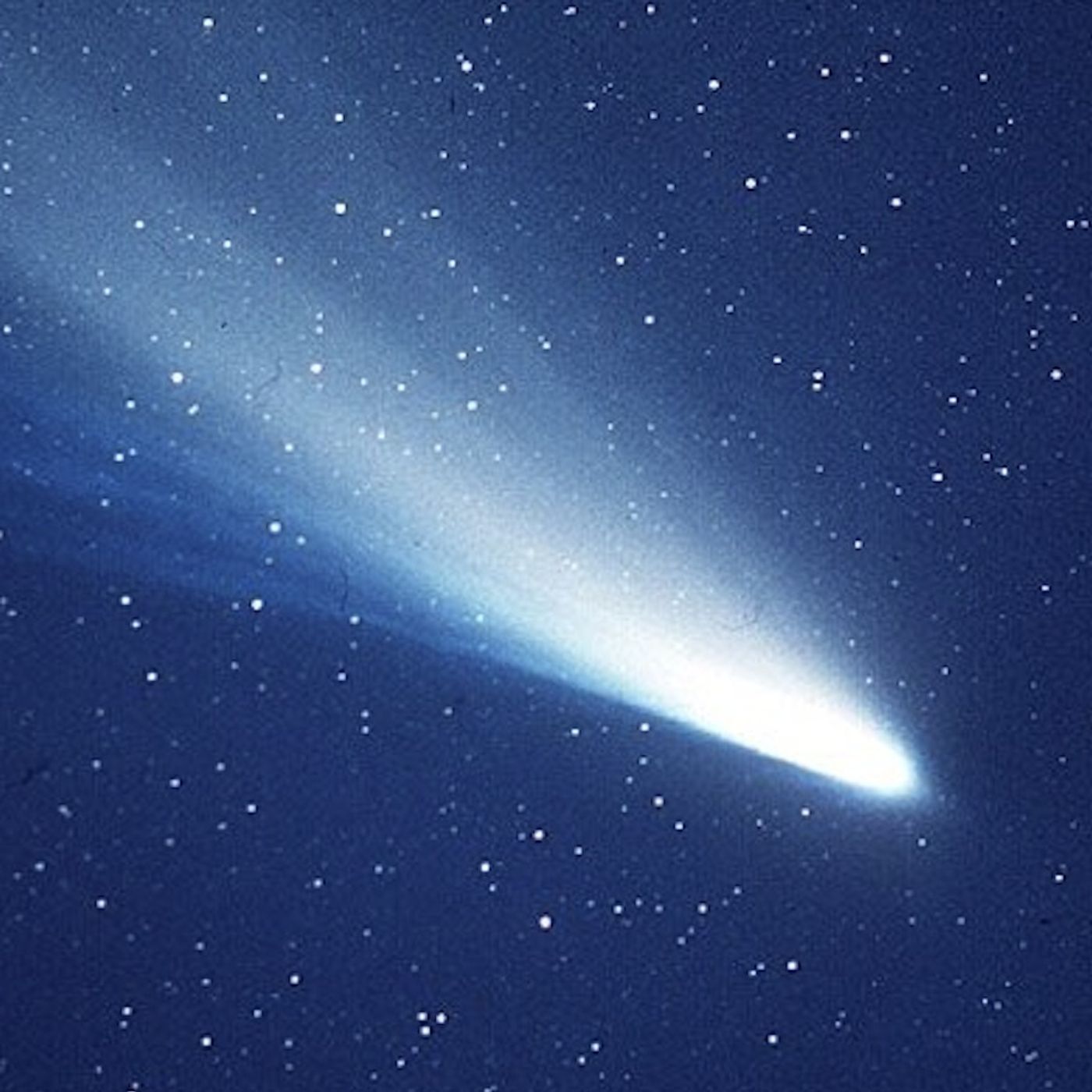
Asteroids appear as moving points of light in an asteroid hunter's images so that when my Catalina Sky Survey teammate Alex Gibbs spotted a fuzzy moving object he immediately suspected it to be a comet. The data obtained by astronomers over the next 8 days enabled scientists at the Minor Planet Center to verify Alex's 31st comet discovery and give it the name C/2018 A6 (Gibbs). In January of 2018 it was in the constellation of Leo traveling from the vast empty space above the Sun's north pole toward the plane of the solar system which contains all of the planets and most of the asteroids. In March of 2018 Comet C/2018 A6 (Gibbs) will cross the plane of the solar system a bit farther from the Sun than the giant planet Jupiter's orbit. After that it will continue on a wide arcing parabolic path, pass under the Sun's south pole in the summer of 2019, and once again cross the plane of the solar system in February of 2021. After that it will continue into the vast empty space above the Sun's north pole from whence it came. How a comet brightens as it approaches the Sun is difficult to predict. With luck humans will be able to spot Comet C/2018 A6 (Gibbs) with their naked eye, binoculars, or a small telescope as it pays a rare visit to our planet's neighborhood.
You May Also Like

Real Ghost Stories Online
Real Ghost Stories Online | Paranormal, Supernatural & Horror Radio

Vedanta Cast
Jonas Masetti
Intelligent Design the Future
Discovery Institute
Bigfoot Eyewitness Radio
Vic Cundiff

Created to Reign
Cornwall Alliance for the Stewardship of Creation

The Grave Talks | Haunted, Paranormal & Supernatural
Ghost Stores, Haunted, Paranormal & Supernatural Stories

The Dissenter
Ricardo Lopes

Tommy Cullum's Let's Get Freaky
Tommy Cullum

Forschung aktuell
Deutschlandfunk

Sciences chrono
France Culture
Real Ghost Stories Online
Real Ghost Stories Online | Paranormal, Supernatural & Horror Radio
Vedanta Cast
Jonas Masetti
Intelligent Design the Future
Discovery Institute
Bigfoot Eyewitness Radio
Vic Cundiff
Created to Reign
Cornwall Alliance for the Stewardship of Creation
The Grave Talks | Haunted, Paranormal & Supernatural
Ghost Stores, Haunted, Paranormal & Supernatural Stories
The Dissenter
Ricardo Lopes
Tommy Cullum's Let's Get Freaky
Tommy Cullum
Forschung aktuell
Deutschlandfunk
Sciences chrono
France Culture
Community discussion