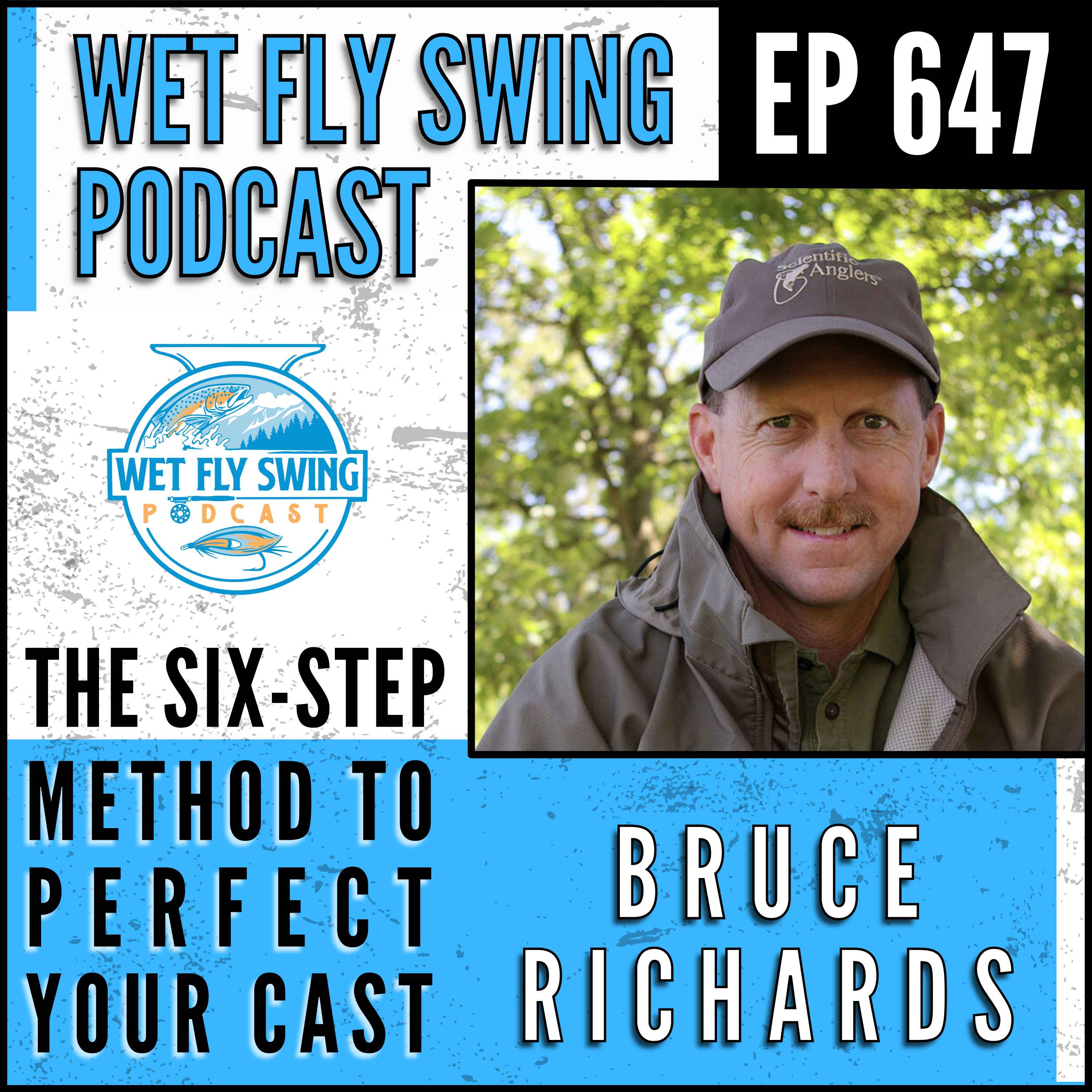
647 | The Six-Step Method to Perfect Your Cast with Bruce Richards - Scientific Anglers, Fly Lines, Fly Rods
Show Notes: https://wetflyswing.com/647
Presented By: Jackson Hole Fly Company, Togens Fly Shop, TroutRoutes, Skwala
Sponsors: https://wetflyswing.com/sponsors
In this episode, Bruce Richards, Scientific Anglers' guru and a master of fly casting, shares his six-step method to perfect your fly cast. Whether you struggle with tailing loops, presentation in windy conditions, or fishing with dry flies, his expertise offers simple and effective solutions.
We also dive into the fascinating history of Scientific Anglers, one of the premier fly line companies. Bruce explains how fly lines have evolved over time, becoming heavier and more specialized. You'll learn which rod is best for beginners and the key actions to look for in a fly rod. But that's not all—he reveals the number one cause of poor fly casts and provides tips on analyzing your cast for continuous improvement. Tune in for an episode packed with practical advice and expert wisdom from Bruce Richards, a true icon in the fly fishing community.
Episode Chapters with Bruce Richards on the Six-Step Method to Perfect Your Cast
2:24 - Bruce reminisces about his upbringing in Midland, Michigan, where he was indirectly introduced to fly fishing through his father's best friend, a sales manager at Scientific Anglers. Although Bruce was eager to join fishing trips as a young boy, he was only allowed to participate when he was older. His early exposure to fly fishing laid the foundation for his future career.
3:24 - His professional journey began in a rather unplanned manner. Despite attempts to secure summer jobs at Scientific Anglers, the seasonal nature of the business meant there were no vacancies. After earning a degree in fisheries, Bruce received an unexpected call from a friend at Scientific Anglers, inviting him to apply for a job. He succeeded in securing a position in 1976, marking the start of a long and varied career within the company.
5:30 - He reflects on the significant changes in the fly fishing industry over the years, particularly focusing on the technological advancements since he started in 1976.
9:33 - We discuss the evolution of fly lines and rods over the years. Bruce confirms that lines have become heavier and explains the history behind this trend. He also explains that as these heavier lines became popular, rod designers began developing stiffer rods to match them. This created a cycle where heavier lines required stiffer rods, which in turn required even heavier lines.
13:29 - We dig into the combination of fly rods and lines, emphasizing the flexibility in pairing them. Bruce points out that the action of a rod can be modified by changing the weight of the line used. He suggests that the most logical approach is to select the line first based on the type of fly, the fishing distance, and the environmental conditions, and then choose a rod that can effectively cast that line.
16:45 - He shares a bit of the history of Scientific Anglers.
19:52 - Bruce recounts an experience with a Canadian casting student, which led him to develop his six-step method for improving fly casting. Initially, Bruce faced challenges instructing the student remotely but found that examining the top leg of the loop in the cast revealed critical insights. The method involves assessing the loop's top leg for straightness, understanding the rod tip's path, analyzing the caster's actions, and making necessary adjustments.
29:48 - Bruce advises those who have never cast before. He emphasizes the importance of understanding the mechanics, like how loops work, which allows for self-analysis. He mentions that after a lesson, beginners usually show significant improvement. However, he notes that this improvement can be fleeting, similar to learning in other activities like golf. The key to sustained improvement lies in practice and remembering specific feedback, such as not bending the wrist too much.
31:31 - I ask Bruce whether a rigid wrist is necessary for casting, and he explains that the wrist plays a crucial role in controlling the rod's casting arc. The combination of shoulder, elbow, and wrist movements is essential for an efficient cast, as using only the elbow can be tiring.
He also elaborates on how the flexibility of the rod affects wrist movement. A softer rod requires more wrist action, while a stiffer rod requires less. He also mentions that the weight of the line can change the dynamics; for example, using a heavier line on a stiff rod alters wrist usage.
33:13 - Bruce advises against using heavier rods than necessary unless the casting conditions demand it, such as in saltwater fishing where heavier lines are needed to cast heavy flies despite the fish not requiring such heavy equipment. The wind is another significant factor that complicates casting, making the right choice of rod and line even more critical.
35:16 - We go into step four of his six-step method which is about changing the body movements. Bruce describes a scenario where a wide, sloppy loop with an upward curve indicates a wide casting arc, often due to improper wrist movement. He emphasizes that while beginners might struggle to identify these issues on their own, instructors or more advanced casters can use the six-step method to troubleshoot and correct the cast. By narrowing the casting arc, the rod tip path becomes straighter, leading to a more efficient loop.
37:30 - Bruce recommends checking out the Fly Fishers International (FFI) website for valuable sources on loops. Specifically, he highlights a journal and newsletter called "The Loop Journal" which is available on the same website.
41:40 - We discuss the origins and development of the FFI certification program, which was initiated in 1990 and completed by 1992. Bruce collaborated with other prominent figures in the field, including Lefty Kreh, Joan Wulff, Gary Borger, and Chico Fernandez, among others to develop the program. The program has since become the leading and most respected certification for fly-casting instructors internationally.
43:03 - We dig into the FFI's certification process. Many aspiring instructors initially overestimate their casting skills until they undergo the program and realize the areas they need to improve. Bruce mentions that the time it takes to get certified varies; some individuals may take years, while others can achieve certification in about a year with focused effort and mentorship.
47:57 - We talk about what typically causes someone to create a tailing loop during casting. Bruce explains that the issue often arises when an angler tries to cast longer distances, around 60 to 65 feet. At this point, they might apply too much force at the end of their casting stroke. This extra punch causes the rod to bend excessively, leading the rod tip to curve down and create a tailing loop.
He elaborates that instead of adding force at the end of the stroke, the caster should begin accelerating the rod earlier in the casting stroke. This smooth, early acceleration distributes the force more evenly and prevents the tailing loop from forming.
50:54 - We discuss the evolution of sinking lines. Bruce shares his experience, noting that the original sinking lines were made by adding powdered lead to the coating, which was effective but problematic due to lead's toxicity.
Despite advancements, he also notes that the fundamental chemistry and process of making sinking lines have not drastically changed since the 19
You May Also Like

Touchline Fracas: A Premier League Football Podcast ( Arsenal Chelsea Liverpool Spurs Manchester United )
Touchline MG

WhatCulture Wrestling
WhatCulture.com
94WIP Middays with Hugh Douglas and Joe Giglio
Audacy

Music City Audible
Justin Graver, Justin Melo
Dukes & Bell
Audacy
Rothen s'enflamme
RMC

DNVR Denver Broncos Podcast
ALLCITY Network, DNVR Sports
The Colin Cowherd Podcast
iHeartPodcasts and The Volume

Giants Official Podcast Network | New York Giants
New York Giants
NFL Stock Exchange: An NFL Draft Podcast
NFLSE
Touchline Fracas: A Premier League Football Podcast ( Arsenal Chelsea Liverpool Spurs Manchester United )
Touchline MG
WhatCulture Wrestling
WhatCulture.com
94WIP Middays with Hugh Douglas and Joe Giglio
Audacy
Music City Audible
Justin Graver, Justin Melo
Dukes & Bell
Audacy
Rothen s'enflamme
RMC
DNVR Denver Broncos Podcast
ALLCITY Network, DNVR Sports
The Colin Cowherd Podcast
iHeartPodcasts and The Volume
Giants Official Podcast Network | New York Giants
New York Giants
NFL Stock Exchange: An NFL Draft Podcast
NFLSE
Community discussion